Richard Deyo, MD, on Health Care and Back Pain Treatment

In 1998, Richard Deyo, MD, one of the most clear-thinking back pain experts in the U.S., published an article in Scientific American (paywall) explaining what was wrong with back pain treatment. Not a lot has changed. See his list of myths, complete with matching cartoons, on page 52; his book Hope or Hype: The Obsession with Medical Advances and the High Cost of False Promises is also a must-read.


National Institute of Arthritis and Musculoskeletal and Skin Diseases

For a general overview of what’s out there, visit the website of NIAMS: the National Institute of Arthritis and Musculoskeletal and Skin Diseases. It’s one of the research institutes of the National Institutes of Health. Click here to get a decent overview of options and issues. It’s not perfect—it’s possibly influenced by the FDA, an agency that is very much under the thumb of pharmaceutical companies and device manufacturers—but a it’s decent source to start with.

Implications for Health Care Reform

The Dartmouth Atlas provides shocking data about the prevalence of spine surgery here.

If you’re interested in how surgeons and device manufacturers wound up in bed together, you’ll want to have a look at the website for the Association of Medical Ethics. Use the Doctor Payments search tool to find out how much surgeons have been paid to consult on a specific product.

The investigative reporting organization called ProPublica is creating an increasingly robust and truly eye-opening source of information regarding the payments that drug and device companies make to doctors in return for promoting their drugs. This database—broken down by state, which is more convenient—has been assembled by the superb investigative reporters at ProPublica. Start with this article that explains how patients can use the database. The database is here.

Exercise/Balance Balls

Low-tech and inexpensive giant exercise balls, known as physioballs, Swiss balls and posture balls, can play an important part in your rehab – and they’re fun to have around! Working out on a ball requires balance, which means that you must recruit the deeper back muscles, rather than the large, superficial ones. Typical exercises include push-ups with the legs supported by on the ball, crunches with the back resting on the ball, and leg lifts (on your back) with the ball squeezed between the ankles. Some people use these balls as office chairs, with good results. To remain upright, you need to exercise good posture.  If you’re interested in trying one out, check out the products available at FitBALL.

Finding a Personal Trainer

Finding a highly qualified, back pain-focused personal trainer or exercise specialist is no simple task. Anyone can call himself or herself a personal trainer. To find the person you need, the American College of Sports Medicine is an excellent resource.


The NSCA is the National Strength and Conditioning Association, based in Colorado Springs, CO, which – probably not a coincidence – is also the location of the flagship training center for the U.S. Olympic Committee. Several people who definitely know told me that NSCA turns out the most qualified personal trainers, most of who have degrees in exercise science. If you look for a trainer with an NSCA-CPT (certified personal trainer) certification, you’re off to a good start. Here are some things you should look for in a trainer. And here is a not-too-great index of NSCA trainers. (You can search by state, but when you do, the results are not alphabetical.)

Physical Therapists with Orthopedic Certification

Finding a physical therapist with orthopedic certification can be challenging, but fortunately the American Physical Therapy Association has a helpful website. After you review the material there, click here to search at a very specific level. Look for therapists who have OCS and DPT after their names. This means that they have specific orthopedic training and doctoral degrees.

Pure HealthyBack Michigan Rehab and MedX

Michigan

If you’re in Michigan, count yourself lucky – you’ve got seven of the top rehab facilities scattered around the state. Pure HealthyBack Michigan uses MedX medical therapy machines, exercise machines and the McKenzie Method to treat spine patients. And spine patients are the only patients they treat. Be sure to view the excellent video demonstration of how MedX works (look for the hyperlink “Watch our video” about halfway down the page).

Spanish-Language Rehabilitation, Escuela Espanola de la Espalda

Majorca, Spain

If you speak Spanish and would like to join an functional rehab program in the Balearic Islands, have a look at the program offered by the Fundación Kovacs at S’AiguaBlava. The program is called Escuela Espanola de la Espalda. There are three facilities, each with a fantastic back-oriented gym program, and an amazing “high vitality” spa – which in much of Europe means hydrotherapy in a large pool with may stations equipped with jets at different heights. The facility I visited, on Majorca, combined physical therapy with supervised, high intensity exercise.

Here (again, in Spanish) is a video with director Dr. Mario Gestoso, explaining what goes on in the Back School.

Craig Liebenson, International Society of Clinical Rehabilitation Specialists

California

Craig Liebenson has been instrumental in developing the International Society of Clinical Rehabilitation Specialists, many of whom were trained as chiropractors, but have chosen to retrain in spine rehab and sports medicine. For information on providers in your area, search here. Have a look at some of Craig Liebenson’s work here. Trained as a chiropractor, he’s one of the great spine rehab specialists, located in West Los Angeles.

Here are a couple of Craig Liebenson’s articles in the Journal of Bodywork and Movement Therapies, describing exercises that you can do, though it would be best to do them under supervision.  See The Missing Link in Protecting Against Back Pain and How to Stabilize My Back. (Note that the exercises described here are variations of exercises that Dr. Stuart McGill has made famous, but there’s no such thing as intellectual property when you’re talking about exercises.)

Also check out the advisory committee here.

Ergonomic Desks

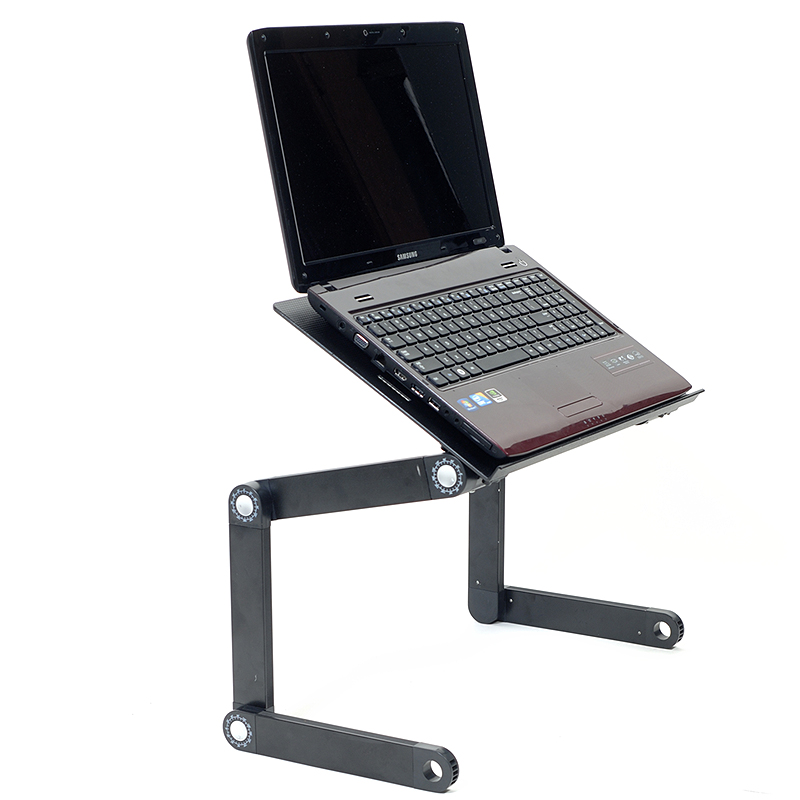
Wish you could use a standing desk occasionally, but don’t want to be bothered with dealing with one all the time? (Studies show that in most cases, people spend a lot of money for a desk that goes up and down – and alter its position twice before giving up.) Uncaged Ergonomics has a nifty, and decently-priced, addition to the office that could be the answer to your prayers.


Back Pain Forums

The Internet is rife with back pain forums – essentially chat rooms where people talk about their conditions, and no one ever seems to get better. These are scary places, and it would be best to stay away from them, unless you’re looking for a pity party. (Forum members typically post an ever-lengthening list of surgical interventions and pharmaceutical cocktails after their names.) There is a great deal of misinformation out there, not to mention desperation. If you visit the forums, do so with a skeptical eye.

One of the better ones is run by the Spine Patient Society. There is also a discussion board at ADR Support, which also addresses artificial disc replacement here.

Dr. Stuart McGill, BackFitPro

Waterloo, Ontario, Canada

Dr. Stuart McGill is a professor of biomechanics at the University of Waterloo in Ontario, Canada. He frequently advises governments, corporations, and elite athletes and athletic teams when it comes to difficult back cases. In his laboratory at the University of Waterloo, experts test out products and recommendations, and only the best make it to his website, BackFitPro, a repository of back pain prevention and rehabilitation information.

Watch this video to get to know McGill and his work a little better:


You can also find a video series in which Dr. McGill busts back exercise myths here or read an article about core training by Dr. McGill here.

Dr. Yang: Tai Chi and Qigong for Beginners

This video provides a brief introduction to Tai Chi with Dr. Yang, as a sample of what you might find on the full DVD. Tai chi is an extremely popular and very gentle physical way to fight stress and reduce anxiety.


There is also a DVD available for purchase in which Dr. Yang presents gentle exercises to ease lower back pain in the tradition of Qigong (pronounced chee-kung), “the art of using the mind to direct the energy within your body to improve health and vitality.” The DVD serves as an introductory guide for beginners, going over the principal concepts of qigong as well as detailing the exercises.

Required Reading: Back Care Basics by Mary Pullig Schatz

The book Back Care Basics: A Doctor’s Gentle Yoga Program for Back and Neck Pain Relief is a good source to read up on therapeutic yoga as a low-cost solution for back conditions. Author Mary Pullig Schatz emphasizes positivity and dedication in both the prevention and treatment of issues from strain, arthritis, osteoporosis, scoliosis, pregnancy, and stress with yoga.