Find a registered yoga teacher with the Yoga Alliance here.
California, Illinois, Massachusetts, Pennsylvania
Patricia Walden (Arlington, MA)
Manouso Manos, (San Francisco)
Judy Brick Freedman (Philadelphia, PA)
United Kingdom
Yoga for Back Pain uses research from the University of York and promotes the program “Yoga for Healthy Lower Backs.” Learn more here.
London, United Kingdom
Learn more about Clinical Pilates and the Integrated Physiotherapy and Pilates Centre, located in London, here.
A report in the Journal of Orthopaedic & Sports Physical Therapy, published May 2012, states that certain individuals with low-back pain might benefit from Pilates-based exercise. Read the research report here.
Listen to this interview with Dr. Mel Pohl about pain and avoiding addiction.
Watch the video from 1949 about posture and personality or click here
Watch the video below from 1953 or click here
Read this article in Yoga International about using your abdominals to support your back.
Toronto, Ontario, Canada
Check out New Element Training and their approach to training.
Read “Everything that’s wrong with high heels” on The Washington Post blog.
Watch this lecture by Arnold Kriegstein, MD, PhD, presented by University of California Television.
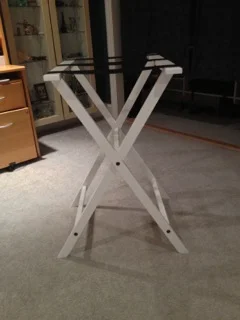
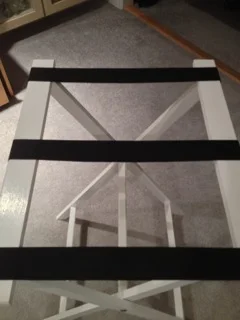
I used to struggle with my luggage. I could almost guarantee that I would leave for a trip in pain, because packing is the flexion-inducing activity of all time. I used to plop the suitcase on the bed, and approach it in the only way I could, with straight knees and a stooped spine. After talking to Stuart McGill, who helped me realize that an overabundance of flexion was my enemy, I searched the SkyMall catalogue, stuffed with items for people with bad backs, for an item I was certain had to exist — a significantly taller luggage rack. There was no such thing. I expanded my search to the Internet and learned that although there were hundreds of styles, not one of them stood more than 23 inches tall — at about the height of my knees. If I wanted such a rack, it would be up to me to create it. It would be simple to build, but I was short of time, so I located John Hession, the proprietor of Exotic Savannah Woodworks, who agreed to make such a rack for me, to my specifications, for less than $100. For several days, I considered the best height for my 5’ 10” frame. At some point, would excessive height make it unstable? I chose 32 inches, which I estimated to be hip high. When it arrived, it was perfect — glossy white with black straps. I unfolded it, placed my Rimowa roll aboard on top, and started packing, with queenly bearing. The next morning, as I left for the airport, something was different. Nothing hurt.
Read this article by Dr. Stuart McGill in the Strength and Conditioning Journal published by the National Strength and Conditioning Association.
Experts say thumbs down on inversion boots and vibration tables. Better for bats than for bad backs!

photo credit: Singapore Zoo & River Safari December 2013 408 via photopin (license) no changes were made to photo
Minnesota
Read this article originally published in The Wall Street Journal titled, "In Excruciating New Cure for Back Pain, Doctors Tell Patients to Hit the Weights." It highlights the Physicians Neck and Back Clinic in Minnesota.
Minnesota
Here’s a midwestern program based on James Rainville’s protocol.
Dr. Dan Clauw, the director of the Chronic Pain and Fatigue Center at the University of Michigan, presents an overview of what is currently known about the underlying causes of chronic pain — the notion of brain-pain amplification — and how you should proceed. Hint: Opioids are not your answer.